12 simple ways to encourage an Interserve worker

In this new year, why not resolve to encourage a Partner or On Tracker more often? Here are some ideas to get you started…

1. Pray

Pray, regularly and specifically, and send your worker a quick note to say what you’ve been praying for.

2. Write a letter or post a care package

Get out the nice stationery or a pretty card, and write a few lines. Find out what favourite Aussie item they can’t find in their country and send it to them, for a special occasion or “just because”.

(It’s a good idea to check whether they can receive parcels first.)

3. Skype

You don’t need to wait until they’re back in Australia to have a face-to-face chat.

4. Send them a birthday card

Do you know when your worker’s birthday is? Put a reminder on your calendar to post them a card in time for their birthday. An e-card is another great option.

5. Increase your financial support

The costs of living overseas are always rising. Consider whether you could increase the amount you give each month – even if it means giving sacrificially.

6. Read their newsletter

Really read it. Send a short email back thanking them for the update. Perhaps you could update your church as well.

7. Think of the parents and grandparents

Parents and family members make sacrifices when workers move overseas. A phone call or a visit is a great way to let them know you’re thinking of them too.

8. Remember the kids and teenagers

Growing up cross-culturally can be challenging. If your workers’ children know you, make a point of chatting to them too. Your children could write or draw a picture. And when they’re in Australia, why not offer to take them out to a footy game or the zoo?

9. Visit!

Ask whether your worker in a position to have visitors. A friendly face from home could be very welcome! Then save up, use some holiday time and jump on a plane. Who knows, you might fall in love with the country too…

10. Ask questions

Is your worker making exciting headway in their community? Don’t understand why they’re taking a certain approach to ministry? Want to know how they’re really going? Ask questions.

11. Welcome home

When your Interserve workers are on Home Assignment, take them out for coffee. Offer to organise a car or house. Host them for dinner, or deliver a home-cooked meal when they’re too tired to cook. Offer them some time in your family’s holiday house. The ideas are endless!

12. Stay in touch

Keep them up to date with your life – even if it’s just a quick email. Tell them about the challenges in your work or the winning goal your kid kicked in the soccer match. They care about you too!

BONUS:

Open up your email right now, say hello to your Interserve worker, and ask them how you can encourage them this year.

Why faith and action?

“Without faith, it is impossible to please God” (Hebrews 11:6). It is tempting to quote this verse alone. But the passage it comes from lists what the great characters of the Bible did with their faith. Faith and action weren’t just passing acquaintances, but their lifelong companions.

Faith compels action

Central to the Christian message is a personal belief in the claims of Jesus Christ. But Christianity’s individualised faith also hides a trap within – it can disconnect us from the actions that should demonstrate it. Comforted by our own salvation, satisfied by token expressions of faith, and blessed by our relative wealth, putting our faith into action can be ignored or at least minimised. But every aspect of the gospel actually screams: Live it! Act on it! The Apostle Paul’s motivation is that Christ’s love compels him to no longer to live for himself but for Him who died for us all (2 Cor 5:14-15). The motivation is not a belligerent Biblical command but a heartfelt compulsion to share God’s love with the world. Our faith in the transforming power of the gospel compels us beyond belief into action.

Faith perfects action

Anyone can love and serve the needs of others. It’s part of what it means to be human. What makes the difference for us is our faith. Not only does our faith provide the motivation for action, it also informs and perfects how we do it. As Christians, we represent Christ in our service for others. Jesus is the one we look to, as Saviour and as exemplar. His life gives us a template for action, specifying our goals and testing our motives. Running around trying to prove our faith to God or others only leads to frustration or failure. Instead, we measure our actions against the tenets and experience of our faith as exemplified by the life of Jesus.

Action inspires faith

Seeing God at work in our often inadequate attempts to serve is a great inspiration to our faith. Stepping out in faith, however tentatively, unleashes the opportunity of seeing God at work. Faith is no more than a theory in our lives before we do anything with it. Real faith puts us at risk. Real action is the only way to develop our faith.

We have much to learn from Christians in Asia and the Arab world whose faith in action can put their lives in danger. Sharing their journeys of faith stretches ours, giving us the privilege of learning from each other and together walking with Jesus amongst the poor and marginalised.

So, why not?

So what stops us from putting our faith into action? Is it lack of conviction that the gospel is really transformational? Sure, Christianity doesn’t have a monopoly on caring for others. Is it fear that our finances or safety will be threatened? Yes, they will be. Does social or family pressure to preserve certainty play a part? Of course. Faith by definition is a belief in the unknown, and that can be scary. Is it a lack of confidence in our abilities? Living and serving in a cross-cultural context is known to challenge our capacity, resilience and skills.

So when all of these fears threaten to paralyse my action I look two ways. First, I look at the world; particularly those regions where unspeakable pain and suffering exist not just for a moment but as a way of life with no means escape. I’ve lived there and am forever changed by these wonderful people. Then I look through the eyes of Jesus and imagine his response to their suffering as His call to me. I need to do something about God so loving the world. Following in the footsteps of Jesus is putting faith into action.

Reflection shared by a returned Partner, who served for eight years in the Middle East.

When Women Speak…

Interserve worker Cathy explains why the voices of women are incredibly important in understanding Islam today – and introduces a brand new forum for discussion.

When Women Speak… is a new network formed to encourage exploration of the place of women’s voices where Christians and Muslims meet. It exists because we believe it is time we heard the voices of Muslim women more clearly.

The network was launched last year with a colloquium in Melbourne, bringing together 28 women scholar practitioners from 16 nations, including first and second generation followers of Jesus from a Muslim background. Our vision is that women who follow Islam are not veiled from the good news of Jesus Messiah, and that the message is communicated effectively to them.

This network is important because in Muslim culture women have a significant role in preserving and passing on faith to the next generation, yet approaches to mission are often gender-blind. Christian women scholars and practitioners have a unique ability to speak into the gap but they are surprisingly underrepresented in the development of mission strategies and missiologies, in publishing and teaching.

Space for learning

That’s why When Women Speak… network’s activities will include networking, academic and ministry research, publishing, mentoring, training and resource development.

One of these, the ‘Women’s I-view’ course, is presently bringing women practitioners together from Australia and Indonesia, Bangladesh, Pakistan and Afghanistan, Muscat, Egypt and Tunisia. The women, from Interserve and CMS Australia, are exploring topics through readings, conversations with Muslim friends, and shared learning in a virtual classroom. One of the comments has been, ‘Now I have something to talk to my friends about apart from babies, clothes and cooking!’

The When Women Speak… blog is a fortnightly posting that explores a woman’s experience of Islam and the implications for the gospel. It provides a space for women to share their learning, and so help shape the way we engage with our Muslim neighbours.

And the Vivienne Stacey Scholarship was launched as part of the network. Following Vivienne’s vision, the scholarship is committed to providing resources and mentoring for women from countries where Islam is the major religion so that they can be equipped for ministry among their own people.

Collaboration at the heart

It’s all about collaboration. Collaborative research will explore how women who follow Jesus from Islam form community and are included in the family. Collaborative resource development is bringing together a group of women from Muslim backgrounds to explore discipleship needs and develop those resources. Collaborative training will bring women from different backgrounds together to share learning and make that learning available to the next generation. Mentoring is about investing in women so that women who live under Islam receive the message in ways that communicate the reality of God and his goodness.

When Women Speak… is the generating centre for practical acts of loving our Muslim friends. It will enable us to explore innovation in ministry to women living under Islam. There is vision for a conference that brings together Christian and Muslim women scholars to address issues of violence and women. Another part of the vision is for a major research project that brings Christian and Muslim women together to explore important social values that are shaping their lives.

Creating positive change

Muslim women are calling for change, and they are rewriting the discourse of Islam. Women of the mosque and piety movements within Islam want to live a life of faith, and gather to explore what faith looks like in their everyday lives. At the other end, radical women are calling for a fresh interpretation of the Qur’an that is shaped by the realities of our world. Women activists are pressing for change to address social issues that control and harm women’s lives, and Muslim women academics are addressing areas of challenge in faith, society and politics. Each of these is an opportunity for the gospel to engage with these changing discourses.

When Women Speak… is an innovative response to the opportunities in ministry with Muslim women today. Recognising that God is at work drawing women to himself, it challenges the contextual stereotyping of Muslim communities that says if we reach the men, we will reach the community. It says women are the keepers of tradition and among the greatest innovators in Islam today. It enables women who are passionate with love for their Muslim neighbour to explore ministry in a collaborative network.

Find out more, read the blog and discover resources at whenwomenspeak.net

Faith and action

Interserve has a new logo and some new ways of expressing who we are and what we do. Not that we are going in completely new directions – we’re just always seeking new ways to communicate our DNA. We want to be people of faith and action. We want to live our faith and share our faith. We are called to do something with our faith. This faith should change our lives, not just our hearts. “Faith without works is dead” may have become a cliché – but it is in Scripture after all.

Our faith drives us to action, unsettling our inclination to consign it to our private life. It animates our belief in a God who wants to reach out to the whole world. It makes us put our time, education and money where our mouth is. Our faith challenges us to ask ourselves, “How does it change the world?”, not just, “How does it make me feel better?”.

Action is our response to faith. Walking down a crowded street with a local colleague in the Middle East, he turned and said, “It’s not the work that you are doing here with us that moves me the most. It’s just that you’re here – that you left the comfort of your home country to share our lives”. I felt out of my depth most of the time, but God used my presence there if nothing else.

The Apostle Paul tells the Thessalonians, “Because we loved you so much, we were delighted to share with you not only the gospel of God but our lives as well”. Moving from faith to action can be challenging – but it’s not complicated. God has this scary but rewarding habit of using our tiny acts for purposes far beyond our abilities. We too can find delight in being people of faith and action, sharing the gospel and our lives with those who need its life-giving freedom. Our faith is not private. It’s a call to action.


Reflections from the Church and Community Engagement team

So, am I called or not?

My Entourage

Serving cross-culturally often begins with a call from God into this ministry. Sounds straight-forward, right? Well, not really. As you can see from the stories in this edition of Go, people experience “call” in many different ways and some of our established ideas about “call” are often challenged during the journey.

Firstly, we often think that call needs to be something that is specific and direct. However, aspects of the call can be just as valid when they are general and indirect. Scripture is full of statements which call us all to sacrificially serve Christ throughout our world. This general call is so powerful that we could argue that no further specific calling is necessary, or that not to serve in this way demands a clear call. Furthermore, our knowledge of the immense needs in a hurting world surely constitute such a compelling indirect call that a direct call from above should hardly be necessary. However, what emerges from these stories is that obedience to explore what the general call to be missional means for us personally often leads to specific and direct aspects of this call on our lives.

Through the hole

Secondly, how the call to cross-cultural service develops is often as much about common sense as about extraordinary events. We already have gifts and abilities that we believe God has called us to thus far. How can we use them in another culture? How can we develop and grow spiritually and professionally as we explore God’s purposes for us? But beyond our common sense we need to remember that God’s call is to be a particular kind of person over and above what job or location he calls us to. This is where we should start to look for His call; the practical will unfold as we remain faithful and obedient.

Thirdly, we need to be open to change during the journey. Sometimes, we get the message wrong and God needs to change us. As Bernie found (GO Magazine ONE 2016, Interserve Australia), “It was a very fluid yet intentional process”. We may be clinging on to false dreams. We can also mistake circumstances or closed doors as direction from God when it may be a test of our resolve or an attack of the evil one. Discerning the differences is not always easy, but God remains faithful and will continue to patiently guide, shepherd and grow us.

Amman Jordan

Finally, our personal call is not just between us and God. We are part of the body of Christ – a community on which there is also a call. Our church, family, friends and, yes, even our mission agency are also collectively called to discern God’s will for the body of Christ in this world. This can be a challenge to Western individuality and independence, but this was firmly part of the early church’s missional strategy and is still a powerful aspect of faith in action among other cultures. Let the Christian community speak into your life. Be prepared to let go, remembering that God’s voice is often heard through His people.

We need to be sure of God’s leading as we seek to serve cross-culturally. It’s a big undertaking with a lot at stake. And it will be this call that sustains us when the going gets tough. However, if we are open, our call will keep developing as God continues His work in us, not just as His servants but as His children.

Shared by our new Church and Community Engagement Director. He and his wife recently returned from serving in the Middle East.

461

CHRIST IS ALL: A Prayer

Today we read the below prayer in our devotions. It is from “The Valley of Vision: A Collection of Puritan Prayers and Devotions.” May you be blessed as we were.

O Lover to the Uttermost,
MAY I read the meltings of thy heart to me
in the manger of thy birth,
in the garden of thy agony,
in the cross of thy suffering,
in the tomb of thy resurrection,
in the heaven of thy intercession.
BOLD in this thought I defy my adversary,
tread down his temptations,
resist his schemings,
renounce the world,
am valiant for truth.
DEEPEN in me a sense of my holy relationship to thee,
as spiritual Bridegroom,
as Jehovah’s Fellow,
as sinners’ Friend.
I think of thy glory and my vileness,
thy majesty and my meanness,
thy beauty and my deformity,
thy purity and my filth,
they righteousness and my iniquity.
THOU hast loved me everlastingly, unchangeably,
may I love thee as I am loved;
THOU hast given thyself for me,
may I give myself to thee;
THOU hast died for me,
may I live to thee,
in every moment of my time,
in every movement of my mind,
in every pulse of my heart.
MAY I never dally with the world,
and its allurements,
but walk by thy side,
listen to thy voice,
be clothed with thy graces,
and adorned with thy righteousness. Amen.


“Life right now”: Notes from an Unseen Short Termer

Two realities in my life have ruined me – impoverished children and the Gospel. I use the word “ruined” because these two have been serious game-changers in my life.

God has called Christians to build his kingdom here and to minister to the poor. I want to be a part of that. And, I feel that there’s no higher calling than to serve Christ and His people.Screen Shot 2016-03-05 at 9.13.39 PM

I think what my colleague does is absolutely incredible. She is so faithful to her job. She goes to the slums every morning. She not only picks up the children, she makes it a point to check-in on the families, reminding them of the habits of good hygiene and sharing the Gospel. As I watch her I am learning that being patient and intentional are necessary to impact someone’s life.

To be honest, my heart was heavy after the visit today. Although this isn’t my first time seeing suffering like this, it never gets easy for me. Nonetheless, these experiences make my heart heavy and drive me. As I sit here and reflect, my mind is drawn to this poem:

Lord, engage my heart today
with a passion that will not pass away.
Now torch it with Thy holy fire
that nevermore shall earth’s desire
invade or quench the heaven born power.
I would be trapped within Thy holy will,
thine every holy purpose to fulfill,
that every effort of my life
shall bring rapturous praise to my eternal King.
I pledge from this day to the grave
to be Thine own, unquestioning slave.

-Leonard Ravenhill

Seven Habits of a Refugee-Welcoming Church

I don’t often cry reading the news, but I did shed a tear earlier in the year when three year-old Alan Kurdi appeared in my newsfeed. The images of his body, face down in the sand, remain a chilling reminder of the dangers faced by those fleeing conflicts in Syria and across the Middle East. Despite those dangers, millions of people continue to risk everything for the hope of refuge beyond their borders.

But I also cried because it took the photograph of a lifeless child on a Turkish beach to provoke a response from nations around the world. We – and so many believers – have felt the pressing need to show compassion and Christ’s care for people like Alan Kurdi and their families. But the sheer size of the crisis, and the fact that we are unimaginably distant from it, mean that we can sometimes feel overwhelmed and powerless. How can churches here do anything meaningful for those seeking protection around the globe?

Our experience working with CultureConnect amongst people seeking asylum in Sydney is that the church can be a wonderful welcomer of the displaced right here – we just need to start somewhere. Here are seven habits we think many, if not all, churches can get into.

1. Connect, one person at a time.

“I’d love to welcome a refugee – if only I knew where to find them!” We hear this so often when we share about our work with displaced people. It isn’t often that a person seeking asylum will rock up at church without an introduction; ask God to lead you to them first. You might try spending time in a culturally diverse part of your city, chatting to locals. Consider English classes or other initiatives that engage new arrivals to Australia. [1] Community organisations working with people seeking asylum often need volunteers to help refugees to settle well and feel at home in Australia – it may take some effort, but the new friendships will be well worth it.

2. The roof is your introduction.

We’ve noticed that for many people seeking asylum, walking into a church building feels like walking onto a film set without a script. Strange music is playing, strange words are being used, and everyone seems to know when to stand and sit – except you. It can be a bewildering experience for them, especially if Christian worship was forbidden in their country of origin. So you can imagine that one of the hardest things for us has been watching displaced people visit our church without being welcomed. They sit at the back or stand by themselves in the morning-tea crush, surrounded by regulars catching up with one another over a cuppa.

It can be incredibly hard talking to someone new for the first time, but as someone once told us, ‘the roof is your introduction’. That is, if you and someone else are in the same place, under the same roof, you have at least one thing in common! See where that introduction might take you.

3. “Won’t you have some tea?”

We’ll tell you our secret for the best connections with people seeking asylum: tea and hospitality. Awkward post-church conversations aside, one of the best ways to connect deeply with people is to share time around the table. Meals – or even just cups of tea – are the currency of so many cultures from which our displaced friends come. Almost invariably, they miss that togetherness and community. Why not have a go at offering that togetherness to them? It need not be a complicated affair. What really matters is your willingness to welcome them into your home and into your life.

4. Listen, don’t just do.

As we’ve built trust with our friends who are seeking asylum, we’ve gotten used to the problems they face every day as they try to build new lives here. When food has run out, we’ve bought groceries. When we learned our friend was sleeping on the floor of his rented room, we found a mattress. We’ve fixed cars, looked for jobs, sourced crisis accommodation, provided lifts to church, and written countless letters to support claims for protection. All these things are critical parts of ministry to the displaced; at their best, they show Christ’s care for the whole person.

However, if our welcome consists only of these things, then it can very quickly devour us. There have been times where we’ve been burned out by compassion. We’ve been wearied by what feels like endless neediness from the very people we are trying to serve. God has shown us (the hard way!) that sometimes, it’s best to do less and listen more. It can be easy to jump to conclusions about what we think a displaced person needs, and to go ahead and do it – but rather than fix all their problems, we are learning to be present with them. We pray with them. We try to be a family of faith surrounding them with grace. When we journey with people seeking asylum, we can learn so much from them about perseverance and the struggles of life in this present age. Our friends who trust Jesus have become for us one of the clearest pictures of the work of God in bitterness and trial that we in the West can ever hope to see.

5. Join forces.

Ministry amongst people seeking asylum can often be a case of ‘two steps forward, one step back’. On your own, it can quickly become overwhelming. Seek out people who share your concern for the displaced, either in your church or further afield. For us, that meant getting together with two other families to plan welcome dinners and support for asylum seekers in our church. What might it look like for you to team up with others? Perhaps your church could start something big, like English classes for migrants. Something smaller might be mobilising your church to provide food for those seeking asylum in your community. [2]

6. Pray.

However we go about welcoming refugees, we must begin in prayer to the God who is a refuge for all of us (Psalm 62:8). He alone can bring peace and healing to the broken-hearted, and prayer must be at the heart of any ministry to the displaced. When we fold our concern into the public prayer lives of our church, it can be a strong signal that our care comes from the heart of God. It also tells our friends seeking asylum that their unfinished journeys lie in His care, and that His people have not forgotten them.

It can be difficult to know how to pray. You can keep informed through news sites, or through more general Christian resources such as Operation World. [3] Interserve also have a number of Partners at work amongst people seeking asylum, both in Australia and abroad, whom you could uphold in prayer.

7. Change the conversation.

The broader discussion in Australia about asylum issues is sometimes enough to make us despair. Instead of talking about rights or responsibilities, our leaders are more concerned about ‘stopping the boats’ and deterrence through detention. People seeking asylum have become a target for anxieties about security and the threat of religious terrorism. As they are increasingly marginalised in our communities, the divide between ‘them’ and ‘us’ is reinforced. The church, however, can speak life into this discussion. Pick up your pens and write to your local Member of Parliament (a real, paper-and-pen letter is far more likely to be read than an email) and let them know your views on asylum policy. Share stories about the positive impact refugees can have in their new homes. Be informed about the many myths circulating about refugees [4] and become equipped to reframe the conversation constructively. These might seem like small steps, but they can go a long way towards changing the way neighbours and communities think about the displaced and how we should receive them.


These seven habits of a refugee-welcoming church may not change the tragedies that led to Alan Kurdi’s body washing up on that beach. However, we hope they will spark your imaginations for embracing those who did make it to our shores, and through that embrace, for showing them the divine love, which opens up the highest possibilities.


This article was written by an Interserve Partner preparing to serve in West Asia alongside refugees.


[1] For those in Sydney, the Welcome Dinner Project aims to bring established Australians together with new arrivals around the kitchen table.

[2] Simple Love is a Christian organisation doing this kind of work in the Sydney region.

[3] Operation World is a guide for praying specifically for each nation around the world.

[4] The Refugee Council of Australia, for example, has produced a number of useful fact sheets.


Our Beloved and His Story

I recently had the privilege of speaking at a conference. The attendees were overseas workers. This and the next three posts will be the messages that I gave.

INTRODUCTION

Thank you for this honor of sharing God’s Word with you all. Over the next few days we are going to look at Paul’s Letter to the Colossians and see what we can learn from it.

As we do, let’s take a moment to consider this book. We hold this book alone to be God’s Word; therefore, it is supremely authorized to govern and guide our beliefs, our values, our thoughts and actions. In this light, we open this book and look to the Holy Spirit to fill us, teach us, guide us, and challenge us.

CHRIST IS OUR LIFE

Turn with me to Colossians 3, verses 1-4. Paul says something interesting here, something that I suggest we use to frame our thinking as we work through sections of this Epistle.

So if you have been raised with Christ, seek the things that are above, where Christ is, seated at the right hand of God. 2 Set your minds on things that are above, not on things that are on earth, 3 for you have died, and your life is hidden with Christ in God. 4 When Christ who is your life is revealed, then you also will be revealed with him in glory.

Let’s focus in on this one clause in verse 4: When Christ who is your life. Paul is saying here that Jesus is our life. Let’s see if we can unpack some of the dimensions of the meaning embedded within these words over the next few days: Christ who is our life.

With this in mind, turn back to the opening verses of Chapter 1.

Notice how Paul starts the Epistle.

From Paul, an apostle of Christ Jesus by the will of God, and Timothy our brother, 2 To those in Colossae, saints and faithful sisters and brothers in Christ: Grace to you and peace from God our Father.

A friend of mine was sleeping on his couch one Sunday afternoon and his young daughter came up to him and poked him. He didn’t move so she said: “Come on, wake up. Wake up, Elsa. Do you want to build a snowman?”

Now, what was my friend’s daughter doing? She realized this setting was similar to the one in the movie “FROZEN”, and the movie provided her with a script, guiding her what to do in that situation. My friend’s daughter was doing as a toddler what we all do. We make sense of the events of our lives through the stories that shape us. The stories that deeply impact us become the raw material of our imaginations. These stories become the mental clay out of which we form our understanding of things. So, what are the compelling narratives that form our view and understanding of our lives?

For Paul, Jesus had broken in upon his small world and radically transformed it. Jesus gave him a calling and a destiny. Due to this “breaking in” Paul began to see himself, his people, and their shared history in the light of the Story of Jesus. Paul discovered that the story of Jesus was shaped by the story of Israel. He also saw that because of who Jesus was and what he had accomplished through his life, death, resurrection and ascension, Jesus fulfilled and transformed the story of Israel. Consequently, Jesus’ Story began to remake Paul and provided Paul with a new script, enabling him to understand his place in God’s world and move forward in that world.

Yet, Paul did not just see himself being woven into Jesus’ life and Story, he understood that each and every person who turns to Jesus becomes intricately woven into Jesus’ life and into Jesus’ story. Again, notice how Paul described Jesus in Chapter 3: When Christ, who is our life, is revealed. Jesus was Paul’s life; Jesus was the Colossian believers’ life; and Jesus is our life.

This helps us to make sense of the beginning of Paul’s letter to the Colossians. Look at how Paul identifies himself and how he identifies those to whom he is writing.

From Paul, an apostle of Christ Jesus 2 To those in Colossae, saints and faithful sisters and brothers in Christ:

Paul identifies himself and them in reference to their belonging to Jesus. Look at verse 13. Paul puts the Colossian believers and himself into the story of Jesus. Jesus’ story is absolutely remarkable in every dimension.

He has rescued us from the power of darkness and transferred us into the kingdom of his beloved Son, 14in whom we have redemption, the forgiveness of sins.

What is going on here in verses 13 and 14?

Jesus’ story is one that reenacted the story of Israel. The exodus was the ultimate story in the Jewish record. The Israelites were rescued from the power of Pharaoh and the Egyptian army. The echo of the exodus story appears in the story of Jesus. And Jesus enables us as his people to participate in the ultimate exodus story: we in Christ are rescued from the power of darkness.

Being from western cultures, we have a tendency to marginalize the significance of this power. We are not inclined to even perceive its existence. Whether we realize it or not, this is a formidable power; and we see the effects of its power every day as we traverse the Middle East, North Africa, and much of the world.

The story of Jesus is not only a story of being rescued from evil unseen powers it is also a story of redemption, of being freed from the debilitating power, guilt, and shame of sin. We are liberated from these because we are given the complete forgiveness of our sins in Christ. And beyond that, we are not only liberated, we are made co-regents, co-rulers. Our transferal into the kingdom of the Son does not denote subjection to his rule (however true this may be)—rather, it denotes participation in his rule, which fits nicely with the immediately mentioned redemption. Paul in Ephesians 2 makes this very clear.

“Redemption” means liberation from slavery. Our being redeemed in Christ means experiencing full liberation from our enslavement to the authority of the darkness.  We are now completely free to participate in the Son’s kingly rule over the evil to which we used to be enslaved.

And how is this all possible? Paul goes on to explain in verses 15 to 19 how this is possible.

As we read these verses, Paul shows us why Jesus is so central to everything, why Jesus is now our life, and why we are to see ourselves as being intricately woven into Jesus’ story, living out his life and his story as we live out our lives and our stories on this earth in his Kingdom.

Why is the life and the story of Jesus supposed to be so central to us? Well, Paul answers this in the next set of verses, giving us the reason why.

Who is this Jesus and why is he supposed to the center of our lives?

15 Who is the image of the invisible God,
the firstborn of all creation;
16 because in him were created all things in the heavens and on the earth,
the visible and the invisible,
whether thrones or dominions or rulers or powers,
all things were created through him and for him.
17 He is before all things, and in him all things hold together.
18 And he is the head of the body, the church.
Who is the beginning,
the firstborn from the dead,
so that he might come to have first place in everything.
19 Because in him all the fullness of God was pleased to dwell,
20 and through him to reconcile all things for him,
whether the things on the earth or the things in the heavens,
by making peace through the blood of his cross.

Paul weaves Jesus into the very works that make God God: the works of creating and sustaining everything that exists, and also redeeming that which was created. Paul not only weaves Jesus into these works by using the prepositions “in” and “through”, he also says that all this creating and redeeming was done “for” Jesus. This visible man, who alone is classified as the image of the invisible God, meaning that he alone perfectly reveals what God is like, not only made creation happen, he made redemption happen.

If we familiarize ourselves with Second Temple Jewish thought and descriptive categories, we discover that Wisdom and Torah held a unique position. God accomplished the creation in and through Wisdom. Look at Proverbs 3:19:

The LORD by wisdom founded the earth;
by understanding he established the heavens;

and Proverbs 8:22

The LORD created me at the beginning of his work,
the first of his acts of long ago.
23 Ages ago I was set up, at the first,
before the beginning of the earth.
24 When there were no depths I was brought forth,
when there were no springs abounding with water.
25 Before the mountains had been shaped,
before the hills, I was brought forth.

Since God was invisible and transcendent how could he be known by mere mortals? The Jewish answer was this: God revealed himself to us through Wisdom, Logos, and Torah. These were the means by which God acted in and revealed himself and his ways to the world. So, the prepositions “by”, “in”, “through”, “to” and “for” were used in speaking about God creating the cosmos.

But something happened with the incarnation of Jesus. Due to the incarnation, even the categories of Wisdom and Torah were no longer adequate. The incarnation compelled the early Jewish believers to reshape these categories. This passage is drawn from a hymn of the early church and, though the categories are drawn from the categories of Wisdom and Torah, the identity and role of Jesus is marvelously greater that the identity and role Wisdom and Torah held.

In the Jewish mindset, God accomplished the creation in and through Wisdom and Torah. However, God did not only accomplish the creation in and through Jesus, God engaged in this creative activity for Jesus. In addition, though the Jewish people thought that through Wisdom and Torah God could bring about the first creation, Wisdom and Torah were not identified as agents through whom God would accomplish the new creation. So, in this Jesus stands alone.

This passage emphasizes that in, through, and for Jesus God effected not only the creation but also the new creation. In doing so, Jesus holds the unique position of being at the center of and positioned high above everything (v. 18).

So, let’s quickly work through this passage:

15 Who is the image of the invisible God,

Now why does Paul start with this point? His thinking is shaped by his conceptual categories. His conceptual categories tend to be different that ours would be. This is because his categories are drawn from the story of Israel. The story of Israel begins with the creation, and with the creation of human beings in God’s image and likeness.

To help us discover Paul’s categories, think about Matthew’s Gospel. How does Matthew develop his Gospel with respect to the person of Jesus and the story of Israel? We get a clue about this by how he opens up his Gospel? Jesus is the Son of David, the Son of Abraham. In this beginning and through the way Matthew develops the identity of Jesus, Matthew shows us that Jesus is True and Faithful Representative Israel. This is why we see the echoes of key events in Israel’s story arising in Jesus’ story. Jesus as Representative Israel completes the purposes God had in his creating Israel as a nation. God in and through Jesus makes the way for the redemption of the nation, and for the redemption of the world.

This category of Jesus as Representative Israel helps us discover what categories Paul is employing here in this passage.

To help us along in a process of discovery, look at Romans 5:12-21. What roles do Adam and Jesus have in Romans 5? They are both used as representatives.

Adam is used as a representative for the human race. We see this same role appear in 1 Corinthians 15:21-22 and in 1 Corinthians 15:45-47.

Romans 5:21 For since death came through a human being, the resurrection of the dead has also come through a human being; 22 for as all die in Adam, so all will be made alive in Christ.

1 Cor. 15:45 Thus it is written, “The first man, Adam, became a living being”; the last Adam became a life-giving spirit. 46 But it is not the spiritual that is first, but the physical, and then the spiritual. 47 The first man was from the earth, a man of dust; the second man is from heaven.

Paul identifies Adam as the head of the old creation. As head, he functions as an individual and corporate entity. He was, as his name signified, humankind. Though we may find this concept problematic in the light of western individualism and supposed autonomy today, with globalization and international economics it is becoming clear that humanity as a whole is bound up in a mess of created existence, of structural and corporate sin and fallenness. Though this is bad news for us who are in Adam, this corporate nature of humanity becomes good news for those of us who are in Christ. Paul parallels Jesus with Adam because Jesus as Representative Adam provides for the redemption of the human race.

Thus, in continuity with the Old Testament and the story of Israel, Paul thinks of Adam, humankind, Jesus, and the Church in structural-corporate and individual terms. In this way Paul models the language concerning the righteous Suffering Servant in Isaiah 40-55. In Isaiah 40-55 the language oscillates between depicting the Servant as an individual and as a corporate people. Solidarity, that is, jointly sharing liabilities and advantages, is the divinely ordained structure in which our personal lives are lived. We find ourselves bound up in the solidarities, vulnerabilities, and consequences of the life and destiny of Adam. Yet, we wondrously also find the saving parallel in the gospel assurance that we, in Christ, as the Last Adam, become a new humanity, bound up in the solidarities, atoning work, and resurrection victory of Christ.

With this category of representative Adam, we now understand what Paul is saying in these verses.

The imagery in verse 15 is from Genesis 1:26 and from Psalm 8. Jesus was fully human otherwise he would not have been able to be our representative. And, in being good news for us, he was the perfect human. God is invisible, unable to be seen. Yet, Jesus bridges this virtually unbridgeable chasm and became the perfect reflection of the invisible God. In this Jesus perfectly fulfilled the role all humans were called to have. As we read in Psalm 8 in the light of Hebrews 2:6-8 we see that:

Jesus was made a little lower than the angels; but, now he is crowned with glory and honor because he suffered death, and by the grace of God he tasted death for everyone.

In doing this, Jesus restores us, empowers us, and releases us to fulfill our initial calling. We have been set free so we can image God in our lives and in our relationships. We are to see ourselves as being a part of the grand exodus story.

the firstborn of all creation;

This does not refer to birth order. Arius made this mistake. He read this and understood that Jesus took on the role of Wisdom and Torah in the minds of the Jewish people, but Arius understood this as saying that Jesus was the first one created.

The word for firstborn in Greek is prototokos. Prototokos can mean the first one born but it can also refer to being given the honor due to the firstborn. For example, we see this the honor of the firstborn being given to the king of Israel in Psalm 89:27 – “I will make him the firstborn, the highest of the kings of the earth.” It is because of what Jesus accomplished that he is now the prototokos of all creation.

16 for in him were created all things in the heavens and on the earth,
the visible and the invisible,
whether thrones or dominions or rulers or powers,
all things were created through him and for him.

Notice how the verb here is passive. Why is this? Although everyone knows that God is the active agent in the creation, the hymn uses the passive tense to highlight the centrality of Jesus in the creation event. All things were created in him (which is a category our western world does not have, our categories would prefer to use the preposition by: “by him all things were created” which is how the NIV translates this. However, this is not the category Paul has in mind. The category is: “in him.” Paul could be trying to the transcendence of the God-Human Jesus- trying to show that Jesus is totally separate from creation yet also showing that the creation cannot have its existence apart from Jesus. This may be why Paul used the preposition “in”. Not only were all things created in Jesus, they were created through him and for him. Jesus is the one through whom the creation happens. In addition, he is the one for whom it was created. God intended for Jesus to be the ultimate beneficiary of the creation. The reference to the invisible thrones, dominions, rulers, and powers denotes spiritual forces that oppose him. We see this in verse 13. Though Jesus may have enemies, he surely has no rivals.

17 He is before all things,

This carries two different meanings. Words can be wondrously multivalent. First, it carries the meaning that Jesus was pre-existent. He existed before anything was created. But, it also carries the meaning that Jesus is preeminent – he is positioned high above everything that is made, whether visible or invisible.

and in him all things hold together.

Not only is Jesus above all things, and existing prior to them all, he is also the one who makes sure everything continues to exist.

18 And he is the head of the body, the church.

Head was a living metaphor with a few distinct meanings. Head could mean “the one in charge”, or “source. The head of a river was seen to be the source of the river, the place where the river begins. Here Paul appears to be saying that Jesus is the source of the church, the one through whom the church began, and the one through whom the church continues to exist. This meaning is elaborated on in the next clause.

Who is the beginning, the firstborn from the dead,

The beginning Paul is referring to here, is the new beginning, the new creation of humanity. Jesus brought the old order to an end on the Cross. And on Easter Sunday Jesus was the first to rise from the dead and inaugurate the New Creation.

so that he might come to have first place in everything.

One of the reasons for all of this, for Jesus’ involvement in the initial creation and for all his involvement in the new creation is so that Jesus will have the preeminent place among all that exists.

Now, for the non-initiate, all this may sound a bit egotistical, as if God and Jesus are obsessed with their own greatness. The next two verses sort of ensure that our human minds don’t take this in a negative direction, accusing God and Jesus of such an obsession:

19 Because in him all the fullness of God was pleased to dwell,
20 and through him to reconcile all things for him,
whether the things on the earth or the things in the heavens,
by making peace through the blood of his cross.

The world is a place of disharmony, brokenness, and evil. Human beings have rebelled against God and brought all the destruction we see and read about. In contrast, God acts on our behalf in Jesus, through Jesus, and also for Jesus.

In Jesus all the fullness of God was pleased to dwell.

As an American I love this. It sort of justifies the American idiosyncrasy of using extra words to emphasize the obvious. For example, we Americans like to say: totally unique, or completely unique. And any person from the UK or Australia will know, unique by definition is an adjective that places its noun in a completely separate category. To say completely unique is to be repetitively redundant.

Now, Paul is validating our idiosyncrasy by saying “all the fullness”. It seems kind of silly to say  “all the fullness”. Fullness means all. Yet, Paul wanted to emphasize the obvious for our benefit.

What Paul is doing here is drawing three Old Testament themes together in this one person, Jesus. First, the word fullness is used to talk about the totality of something, such as in Ps. 96:11 – the sea and all its fullness, Ps 24:1 – the earth and everything in it. Second, the Old Testament pictures God himself or his glory filling the universe, as in Jer. 23:24 “Do I not fill heaven and earth?” Third, the verb “to be pleased” appears in connection with God’s election (as in Psalm 147:11 – “The Lord delights in those who fear him, who put their hope in his unfailing love”), and his dwelling place (as in Psalm 131:13 – “For the Lord has chosen Zion, he has desired it for his dwelling”).

These three lines in the Old Testament converge in Jesus. He is the place in whom God in all his fullness was pleased to dwell. All the attributes and activities of God – his spirit, word, wisdom, and glory – are perfectly displayed in Jesus. God, in all his divine essence and power had taken up residence in Jesus!

In addition, the word pleased in these verses takes us one step further than all this. This word tells us that God was not only delighted for all his fullness to dwell in Jesus, not only delighted that all his fullness in Jesus enabled him to dwell among us, he was also delighted to reconcile us back to himself through Jesus by making peace through the blood of his cross.

CONCLUSION

This gives us an opportunity to stop, worship, and rejoice.

This hymn teaches us that in, through, and for Jesus God brought into being the first creation and the new creation. With regard to the new creation, God delighted in making the way so we could be reconciled with himself, coming to us in the person of his beloved Son, our Lord, Jesus Christ. And since this is the case, Jesus has the unique position of being at the center of and positioned high above everything (v. 18).

Paul’s point by using this hymn is that it is God’s desire and intent that Jesus be the center of our lives, that Jesus be the all-encompassing person and his story be the all-encompassing story that we use to shape our lives, and that he and his story be what we use to direct and to interpret the circumstances of our lives.

As we go through these days, let us reflect on this: how are we making Jesus the center of our lives? As the God-human person, he brings heaven and earth together for us. When we are in him we are linked – as he was – to heaven and to earth. Since Jesus is so important for us, since he is our life, how is he and his story shaping us? How is he and his story directing us? Is his story the one we use to guide and interpret the circumstances of our lives?

Three Ladies of Prayer

In the past 12 months, South Australia has farewelled three wonderful saints of prayer. Since the early ‘70s, in prayer meetings in people’s homes and church halls, prayer warriors represented anybody who toured through Adelaide on deputation before the Father’s throne. They sent care parcels, wrote letters of encouragement and committed to memory the prayer and praise points in partner’s letters. These prayer heroes were, in the main, lowly educated women who developed outstanding knowledge of geography and world politics. They teamed with returned partners and short-termers, mentored younger people in the passion for prayer and launched seekers into careers overseas. The influence of Bible and Medical Missionary Fellowship (BMMF), and later Interserve, was extended because of their intercessions and encouragements.

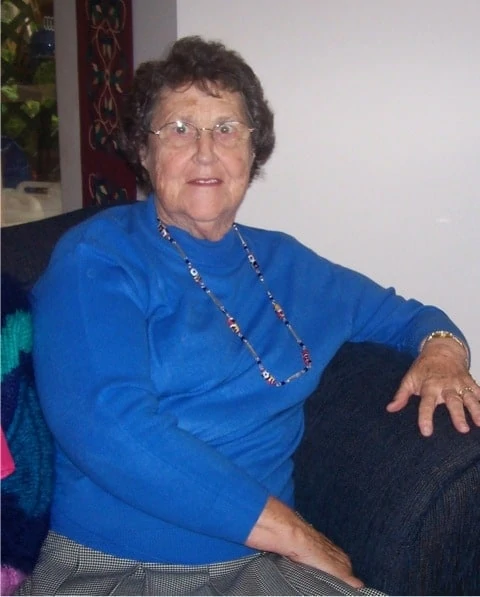
Win Carson

Win Carson was generous in her prayer for overseas mission and, when she died this year, South Australia lost a Christian woman of great influence and Interserve lost a prayer warrior. Win shared with her husband Cec the lifetime habit of a breakfast prayer time dedicated to many missions and people, including Ramabhai Mukti Mission and Interserve. They believed God answers prayer and boldly claimed righteous territory for the Lord. They welcomed missionaries into their home and after Cec’s death, and even in increasing frailty, Win still clung to the privilege of offering her home for the praying circle so that she too could be included. Win was an inspiration to all and we give thanks to God for her life.


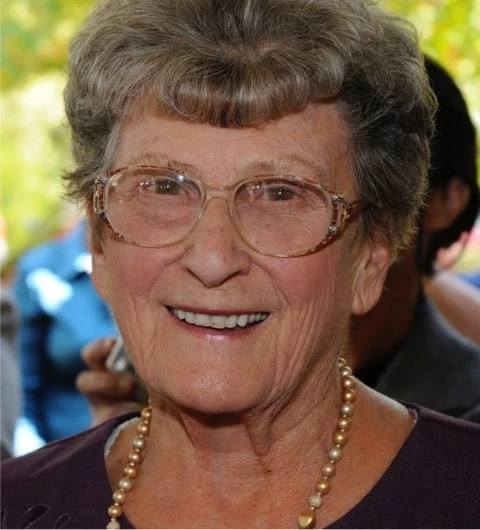
Bessie Eames

On Easter Friday this year, the Lord welcomed Bessie Eames into his presence. She first became involved with BMMF when her daughter did a short-term stint overseas in 1978; from then on she supported prayer meetings, attended events and more latterly offered her home as a prayer centre. As technology developed, she took a seniors computer course so that she could connect to the internet and print off prayer requests for her monthly gathering. She plodded along using one finger to write emails but much preferred to write in her flowing cursive script. Bessie loved prayer and exercised her spiritual gifts and discernment in intercessory warfare. She rejoiced in breakthroughs and tenaciously never gave up when answers were delayed. Partners enjoyed being ministered to by her nurturing embrace and deep insights.


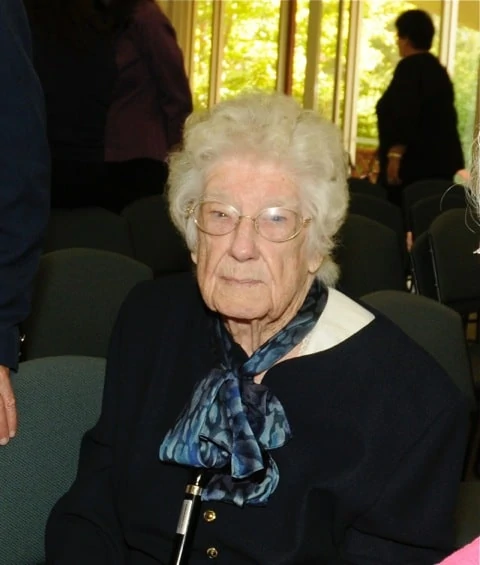
Jean Illman

Within weeks, Jean Illman, a stateswoman for God, also went to be with the Lord. Jean was a visionary and facilitator for all things mission. Under her prayerful care, BMMF was launched in Adelaide in 1959 and through her passionate commitment it grew. She served as secretary for 30 years and as mission representative. Jean supported each partner with monthly letters and treasured their letters, filing them away for prayerful reflection. Her house was the centre for prayer gatherings and fellowship meals, and she hosted every visiting missionary. Jean could see with clarity the needs of emerging mission and prayed to that end. She wrote letters and campaigned to implement strategies that would enable Interserve to flex and adapt to the changing mission culture. Mrs BMMF, SA, has left a legacy of devotion to mission.

 
These three women were passionate about their walk of faith, knew the power of God’s forgiveness and salvation and understood God’s open invitation to every person. Each was convinced of her calling to prayer and to make intercession for people and places, and was totally confident that God was more than able to hear and answer her requests. We thank God for their lives, their example and the heritage they have laid down.

Now it is time for the next generation to step up and assume their positions.


Tributes by Carol Eames, Aileen Pike and Geoff Pike.